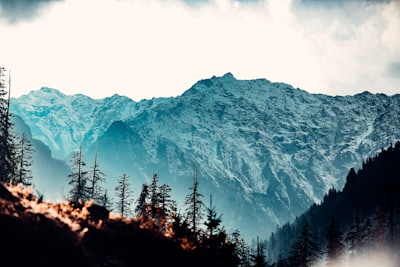
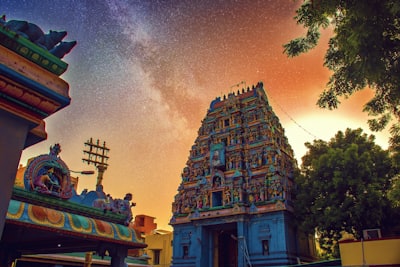
Planning your Panch Kedar Yatra in 2026? This is your definitive guide — all five temple opening and closing dates, trek routes, altitude, difficulty, best time to visit and package information, all in one place. Whether you're planning the complete circuit or visiting just one or two temples, bookmark this page and refer back to it.
🕉️ What is Panch Kedar? The Mahabharata Legend
Panch Kedar is the collective name for five ancient temples of Lord Shiva nestled in the Garhwal Himalayas of Uttarakhand. According to the Mahabharata, after the Kurukshetra war the Pandavas sought Lord Shiva's blessing to atone for the sin of killing their kinsmen. Shiva, wishing to avoid them, disguised himself as a bull and disappeared into the earth — but his body parts emerged at five different sacred sites across the mountains, which became the five Panch Kedar shrines. The Pandavas built temples at each site, and these have been places of worship ever since.
"Completing the Panch Kedar circuit is considered one of the most spiritually significant journeys in Hinduism — not merely a pilgrimage, but a transformation." — Ancient Garhwali tradition
🛕 All 5 Panch Kedar Temples — Detailed Guide 2026
Kedarnath is the crown jewel of the Panch Kedar and one of the 12 Jyotirlingas of India. The ancient stone temple stands dramatically against the backdrop of Kedarnath Peak, with the Mandakini River flowing nearby. Helicopter service is available from Phata, Sirsi and Guptkashi — making it accessible even for senior pilgrims. The temple was extensively damaged in the 2013 floods and has been beautifully rebuilt. Crowds are highest in May–June and September–October.
Tungnath is the world's highest Shiva temple and the shortest trek of the five Panch Kedar shrines. Starting from Chopta (fondly called the Mini Switzerland of India), the 3.5 km trail passes through stunning rhododendron meadows with panoramic views of Nanda Devi, Chaukhamba and Kedarnath peaks. Most trekkers extend to Chandrashila peak (4,130 m) for breathtaking 360° Himalayan views. Perfect for first-timers, families and those with limited time.
Rudranath is the most mystical and remote of the Panch Kedar temples — an open-sky shrine where Lord Shiva's face is worshipped as a natural rock formation. The challenging 20 km trek passes through Lyuti Bugyal and the spectacular Panar Bugyal alpine meadows. This is the only Panch Kedar temple with no enclosure over the main deity. The sacred ponds of Surya Kund, Chandra Kund and Tara Kund surround the temple, and the night sky here is extraordinary.
Madhyamaheshwar is the most peaceful of the five shrines — far fewer crowds compared to Kedarnath, making it perfect for those who want a deep spiritual experience. Set in a breathtaking high-altitude meadow with views of Chaukhamba, Neelkanth and Kedarnath peaks, the temple represents the navel of Lord Shiva. An additional 2 km walk leads to Budha (Old) Madhyamaheshwar, an ancient stone shrine with a small lake offering stunning mountain panoramas.
Kalpeshwar is the only Panch Kedar temple accessible in winter and the easiest to reach — just a 2 km walk from Urgam Village. The temple is uniquely located inside a natural cave where Lord Shiva's matted hair (jata) is worshipped. The Urgam Valley around Kalpeshwar is extraordinarily beautiful, and the region is far less touristy than other Panch Kedar destinations. A perfect addition to a winter Uttarakhand trip or a standalone spiritual day visit.
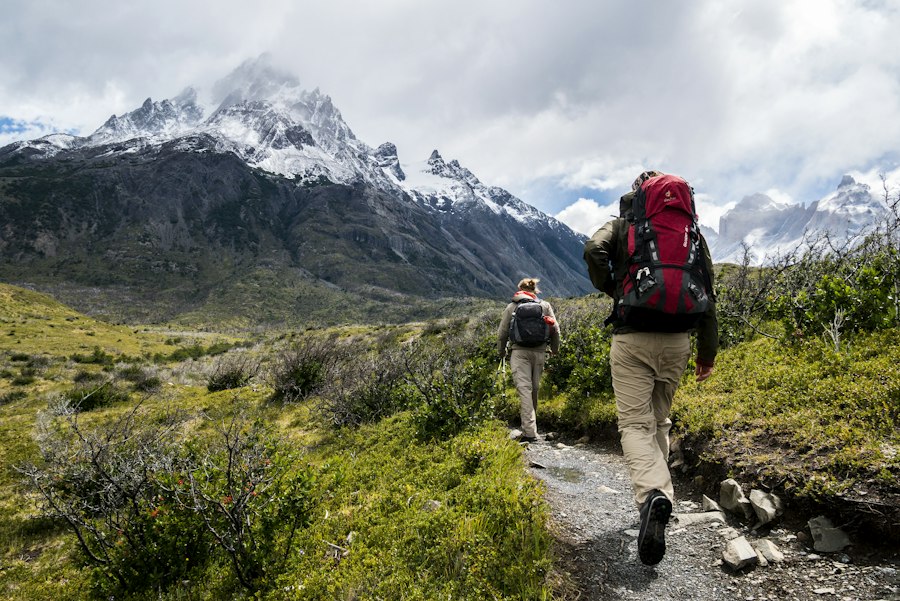
🗺️ Complete Panch Kedar Yatra Route & Itinerary
The traditional order for the Panch Kedar Yatra begins with Kedarnath (the highest sanctity Jyotirlinga) and concludes at Kalpeshwar. The recommended route from Rishikesh is:
| Day | Route | Mode | Distance |
|---|---|---|---|
| Day 1–3 | Rishikesh → Sonprayag → Kedarnath → Darshan → Back to Sonprayag | Drive + Trek | ~200 km + 16 km trek |
| Day 4–6 | Sonprayag → Chopta → Tungnath → Chandrashila → Chopta | Drive + Trek | ~50 km + 5 km trek |
| Day 7–9 | Chopta → Gopeshwar → Sagar → Rudranath → Sagar → Gopeshwar | Drive + Trek | ~60 km + 20 km trek |
| Day 10–12 | Gopeshwar → Ukhimath → Ransi → Madhyamaheshwar → Ransi | Drive + Trek | ~55 km + 16 km trek |
| Day 13–14 | Ransi → Helang → Urgam → Kalpeshwar → Rishikesh | Drive + 2 km walk | ~230 km + 2 km |
🌸 Best Time for Panch Kedar Yatra 2026
- May–June: All five temples open, rhododendrons in bloom, pleasant weather. Kedarnath gets very crowded. Best for first-timers.
- September–October: The ideal window. Crystal-clear skies post-monsoon, golden bugyals, fewer pilgrims. Best for experienced trekkers and photographers.
- July–August: Monsoon season — leeches on trails, landslide risk. Not recommended for Rudranath and Madhyamaheshwar.
- November onwards: Most temples close. Only Kalpeshwar remains accessible.
- Register in advance: Kedarnath requires mandatory online biometric registration at the Char Dham portal (registrationandtouristcare.uk.gov.in).
- Start fitness training at least 4–6 weeks before your yatra — the cumulative trekking is around 70–80 km.
- Carry cash: ATMs are only available in major towns (Gopeshwar, Ukhimath, Guptkashi). There are none at trek bases.
- Altitude caution: Acclimatize properly — don't rush. All five temples are above 2,200 m. Carry Diamox if advised by your doctor.
- Book taxis in advance — public transport between the five base towns is limited and unreliable.
- Pack warm layers even in summer — temperatures drop to near-zero at night above 3,000 m.
- Best combination trip: Kedarnath + Tungnath can be done in 5–6 days and is ideal for first-time Panch Kedar pilgrims.
🛕 Book Your Panch Kedar Package 2026
Firstraveller offers complete Panch Kedar packages — all 5 temples, 15 days, transport + stays + guide included. Group departures every week in May, June, September & October.